
Why Your Electric Duct Heaters Keep Failing: The Engineering Guide to Solid State vs. Mechanical Contactors
In pharmaceutical cleanrooms and critical industrial facilities, precise temperature and humidity control is not a luxury; it is a strict GMP requirement. To achieve exact Relative Humidity (RH), your HVAC system must aggressively cool the air to remove moisture, and then use an electric duct heater to warm it back up to the perfect temperature.
But there is a hidden point of failure inside your electrical panels that causes these heaters to burn out, temperatures to swing uncontrollably, and maintenance costs to skyrocket: the contactor.
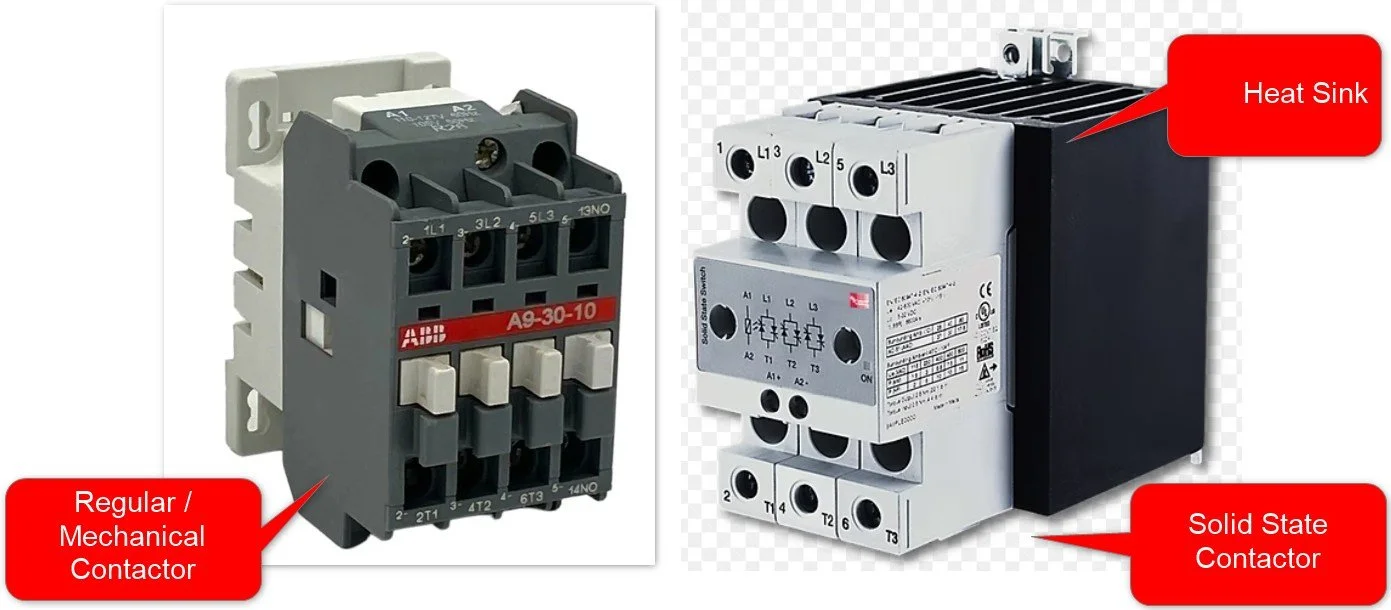
Many legacy systems use standard mechanical contactors to control electric duct heaters. In a critical environment, this is an engineering flaw. Here is a simple breakdown of why elite facility designs exclusively use Solid State Contactors (SSCs) for heating, and how they differ in power and performance.
Contactor vs Solid-State Contactor
| Feature | Contactor | Solid-State Contactor |
|---|---|---|
| Operation | Mechanical | Electronic |
| Moving Parts | Yes | No |
| Speed | Slower | Very fast |
| Noise | Audible click | Silent |
| Lifespan | Limited | Very long |
| Heat | Low | Higher |
| Leakage | None | Small |
| Efficiency | High | Slightly lower |
| Cost | Lower | Higher |
Why Solid State is Mandatory for Duct Heaters
In a standard office building, a heater turns on for 20 minutes and then turns off. A mechanical contactor is fine for this.
However, in a cleanroom, the system needs to hold the temperature to a fraction of a degree. To do this, the computer controller "pulses" the heater. It might tell the heater to turn on for 2 seconds, turn off for 1 second, turn on for 3 seconds, and so on.
If you use a mechanical contactor to pulse a heater every two seconds, the physical metal contacts will literally beat themselves to death and burn out in a matter of weeks. A solid-state contactor can pulse endlessly, thousands of times an hour, for years, because it has no moving parts to degrade. This allows for pinpoint temperature accuracy without destroying your equipment.
The "Fail-Closed" Danger:
When a mechanical contactor breaks, it usually fails open—meaning the power is cut and the heater turns off safely. When a solid-state contactor fails, it often fails closed (short circuits). This means it will continuously send maximum power to the heater, regardless of what the thermostat says. Therefore, a mechanical high-limit safety switch must always be installed in series to cut the main power if the duct begins to overheat.
Critical System Failsafe Simulator
Test the hardwired safety interlocks of an electric duct heater. The 24V safety circuit physically severs the 230V main power via the M1 Contactor to prevent catastrophic failure.
1. The Mechanical Contactor (The "Hammer")
Imagine a heavy-duty light switch that is flipped by a magnet. When the thermostat calls for heat, an electromagnet pulls a heavy piece of metal down with a loud CLACK to connect the circuit and send power to the heater.
How it works: It uses physical, moving metal parts to slam electrical contacts together.
The Problem: Every time those metal pieces separate to turn the heater off, a tiny electrical spark (an arc) jumps between them. Over time, this arcing burns, pits, and destroys the metal contacts.
Best Used For: Brute force. Mechanical contactors are perfect for turning a massive chilled water pump or exhaust fan on in the morning and leaving it running all day.
2. The Solid State Contactor (The "Digital Gate")
Imagine a high-tech dam that controls water flow using invisible forcefields instead of physical metal gates.
How it works: A Solid State Contactor (or Solid State Relay - SSR) uses semiconductors (silicon chips) to allow electricity to pass through. There are zero moving parts.
The Advantage: Because nothing physical is moving or snapping together, it is completely silent, creates no electrical arcing, and never wears out from mechanical friction.
Best Used For: High-precision, rapid-fire control, such as electric duct heaters.
Why Solid State is Mandatory for Duct Heaters
In a standard office building, a heater turns on for 20 minutes and then turns off. A mechanical contactor is fine for this.
Operating Power and Amperage Limits
When deciding which contactor to use, engineers must look at the amperage limits. Here is the reality of how they handle power:
Mechanical Contactors:
Normal Operating Range: 9 Amps to over 1000+ Amps.
The Reality: Mechanical contactors are absolute workhorses for high power. They easily handle the massive voltage spikes that happen when a giant industrial motor starts up. If you need to move 500 Amps to start a heavy compressor, you use mechanical.
Solid State Contactors:
Normal Operating Range: 10 Amps to 150 Amps (Standard HVAC applications).
The Reality: While you can buy solid-state contactors rated for 300 Amps or more, they become incredibly expensive and bulky. Why? Because pushing electricity through silicon chips generates heat. As a rule of thumb, an SSC generates about 1 to 1.5 Watts of heat for every Amp of current. If you have a 100 Amp heater, the SSC is generating 100 Watts of heat inside your electrical panel.
The CED Engineering Reality Check
Solid State Contactors are vastly superior for duct heaters, but they come with two strict engineering rules that amateurs often ignore:
Thermal Management: Because they generate heat, Solid State Contactors must be mounted on aluminum heat sinks, and the electrical panel must have proper cooling fans. If an SSC overheats, it will destroy itself.
The "Fail-Closed" Danger: When a mechanical contactor breaks, it usually fails open—meaning the power is cut and the heater turns off safely. When a solid-state contactor fails, it often fails closed (short circuits). This means it will continuously send maximum power to the heater, regardless of what the thermostat says. Therefore, a mechanical high-limit safety switch must always be installed in series to cut the main power if the duct begins to overheat.
Peer Reviewed By:
[Eng. Ahmed Gomaa] | Senior Electrical Engineer, APM (Iraq). ENI/ ZEFOD PROJECT.
CED Engineering routinely collaborates with top-tier industry experts to ensure our technical publications reflect the highest standards of real-world operational reality
